|
|
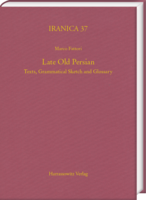
Fattori, Marco
Late Old Persian
Texts, Grammatical Sketch and Glossary
| series: |
|
| volume: | 37 |
| pages/dimensions: | XV, 314 Seiten |
| language: | Englisch |
| binding: | Buch (Hardcover) |
| dimensions: | 17,00 × 24,00 cm |
| publishing date: | 25.11.2026 |
| prices: | ca. 78,00 Eur[D] / 80,20 Eur[A] |
| ISBN: | 978-3-447-12590-1 |
|
more titles of the subject:
Marco Fattori reinterprets the language of Late Achaemenid inscriptions as genuine evidence for the ongoing development of Old Persian, challenging the traditional view that these texts reflect an artificial language produced by scribes who no longer fully mastered the “classical” variety of Darius and Xerxes and attempted to imitate it, often with numerous errors. He presents a new edition of the trilingual inscriptions, a commentary on their exegetical problems, an etymological glossary, and, most importantly, a grammatical sketch that addresses the linguistic features of Late Old Persian.
Drawing on all available Achaemenid evidence, Late Old Persian identifies patterns of linguistic change that had already emerged under Darius and Xerxes and continued to develop in the later period. It thus rejects the idea that Late Old Persian should be regarded as a form of “Proto-Middle Persian” and instead situates it within the continuous evolution of the language. At the same time, the study traces developments in Middle Persian back to earlier stages and relates them to evidence from Late Achaemenid inscriptions. It thereby sheds new light on neglected aspects of Persian linguistic history and proposes new solutions to both specific and broader problems.
|